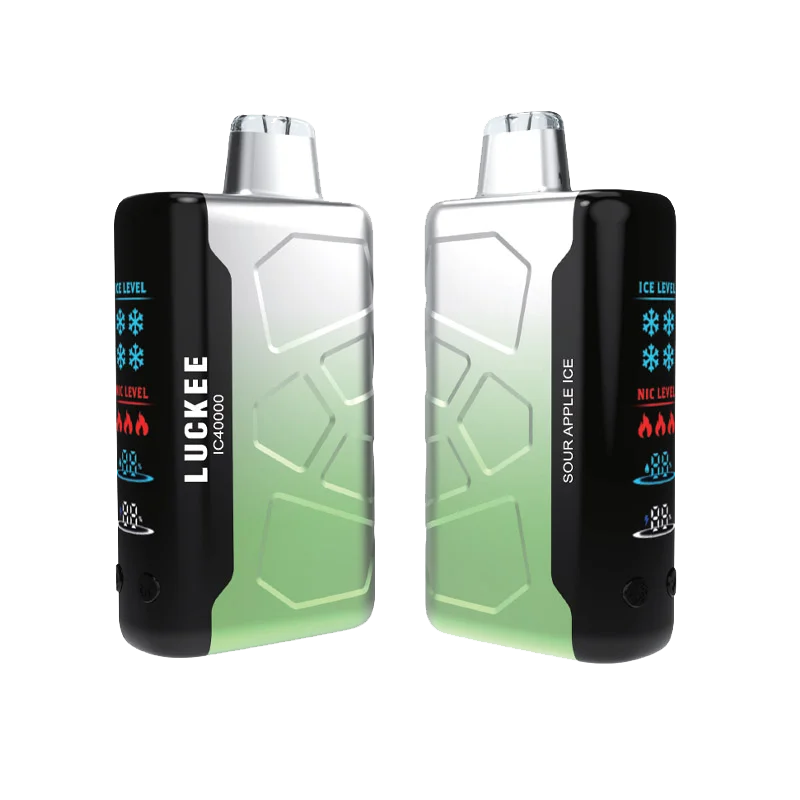
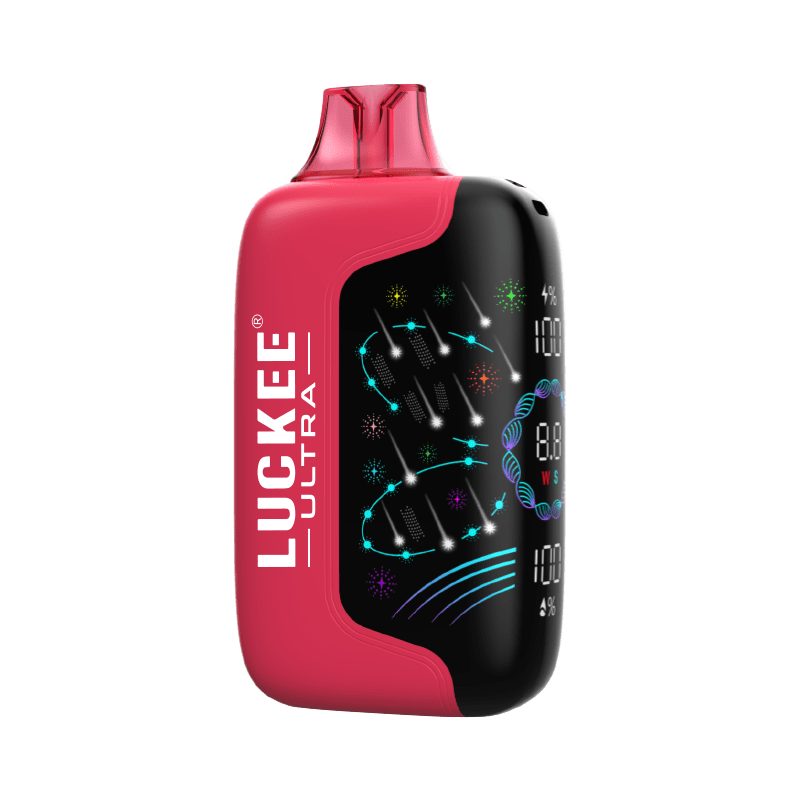
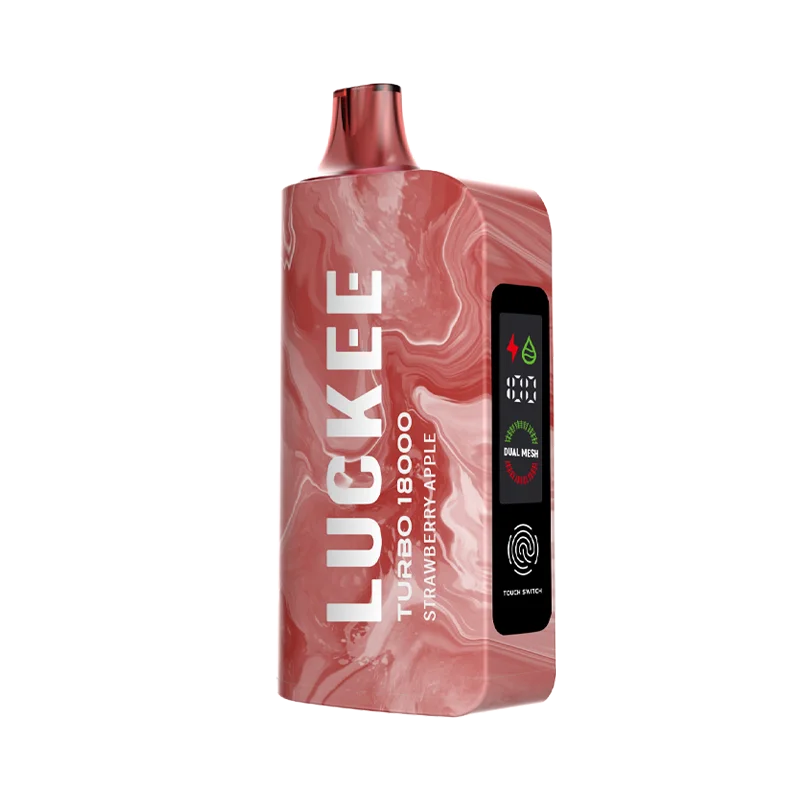
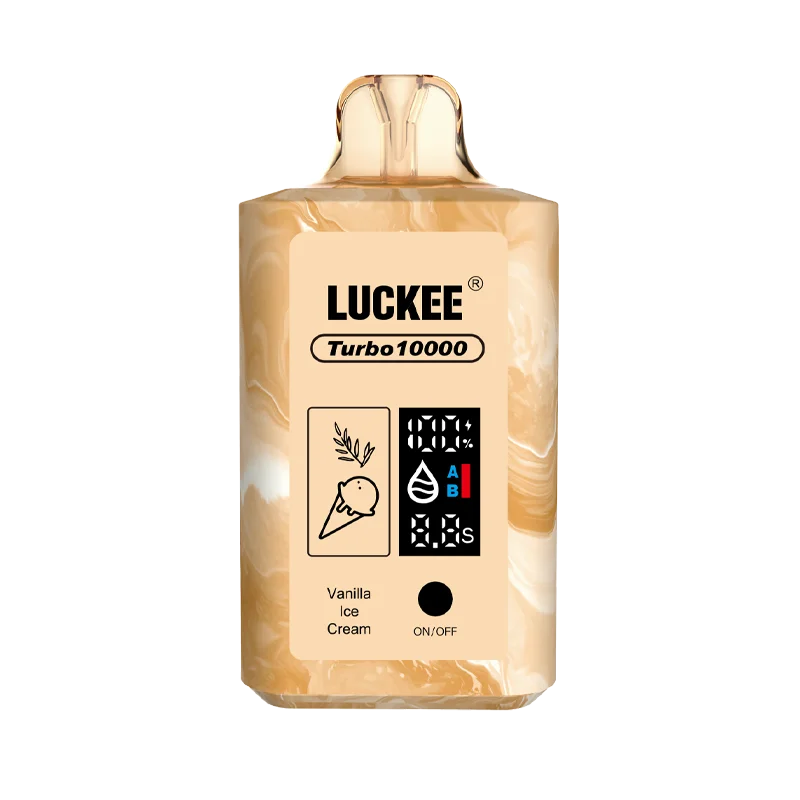


Yes — but not the way food does. Nothing in a bottle of e-liquid turns toxic on a fixed date, and there is no safety cliff at the one- or two-year mark. What happens is slower: the nicotine oxidises, the flavour molecules react with the base, and both fade. Most e-liquid is at its best for one to two years unopened, and less once the seal is broken.
That distinction matters, because most advice online treats e-liquid like milk. It is closer to coffee: stale is a real problem, spoiled mostly is not.
What actually degrades inside the bottle?
Four things, and only two of them matter much.
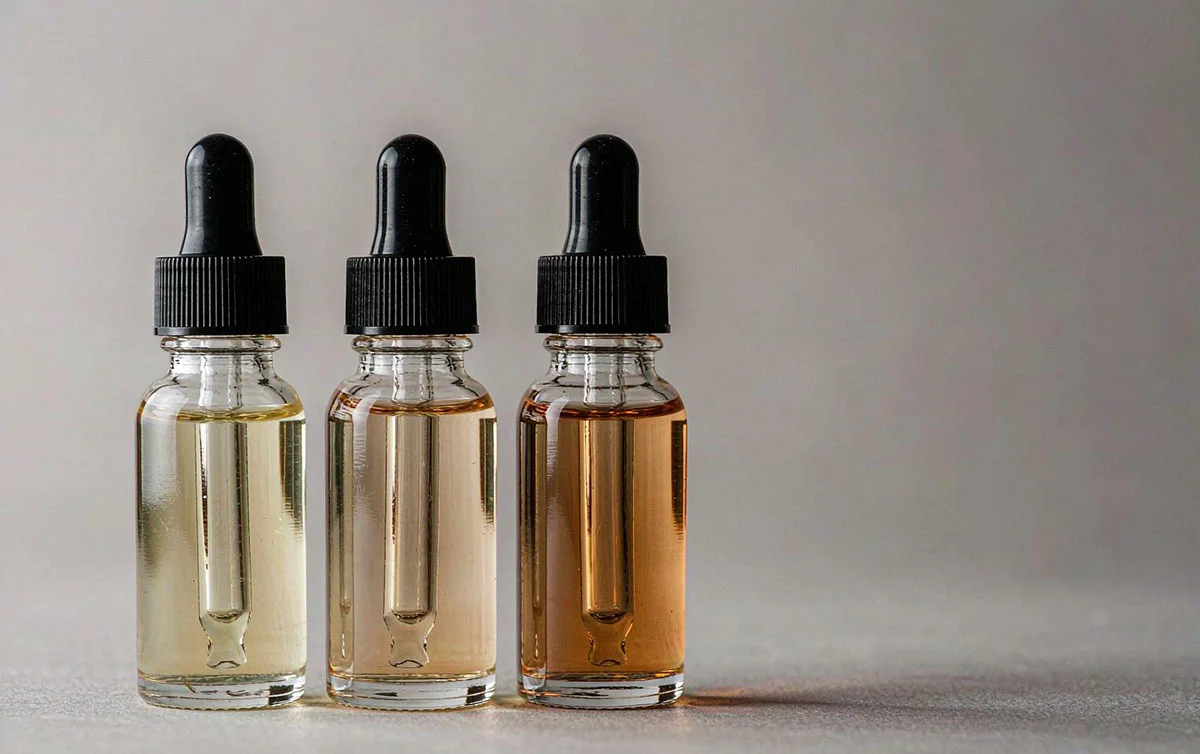
Nicotine is the least stable ingredient. It reacts with oxygen, and light and heat speed that up. The visible result is colour: clear to yellow, yellow to amber, amber to brown. The measurable result is a fall in nicotine content — which is why an old bottle can feel weak even when the label says 20mg, and why strength on the label and strength in the bottle drift apart.
Flavourings are the second weak point, and the mechanism is specific. Many flavour compounds are aldehydes — vanilla, cream, bakery, some fruits — and aldehydes react with propylene glycol to form acetals at room temperature. In one study of 36 flavouring molecules, 12 reacted with PG or VG within four weeks. Fruit and menthol hold up best; custard and bakery notes go flat first.
Propylene glycol is the stabiliser of the pair and does most of the preserving. Vegetable glycerine is hygroscopic — it pulls water from the air — so an open bottle slowly thins and loses sweetness.
| Component | What happens | What you notice | How fast |
|---|---|---|---|
| Nicotine | Oxidises and darkens | Harsher throat hit, less satisfaction, brown tint | Months |
| Flavour aldehydes | React with PG/VG into acetals | Flavour goes flat, soapy or chemical | Weeks to months once open |
| Propylene glycol | Chemically stable | Little change | Slowest of the four |
| Vegetable glycerine | Absorbs ambient water | Thinner, less sweet, weaker vapour | Months |
How long does vape juice last?
The ranges below are what manufacturers print and what testing broadly supports. Treat them as quality guidance, not a safety line.
| Product | Unopened | Once opened | What limits it |
|---|---|---|---|
| 0mg e-liquid | 2 years or more | 6–12 months | Flavour only — no nicotine to lose |
| Freebase 3–20mg | 1–2 years | 3–6 months | Nicotine darkens and weakens first |
| Nicotine salt | 1–2 years | 6–12 months | See the next section — not the shortest |
| Prefilled pod or disposable | 1–2 years sealed | Weeks after first puff | Wet coil exposed to air |
Two rows are worth pausing on. A 0mg bottle outlasts a nicotine one because there is nothing in it to oxidise. And a prefilled device is not on the same clock: from the first puff the coil is wet and touching air, and the countdown changes from years to weeks.
Is salt nicotine really the shortest-lived?
You will read this everywhere: salt nicotine expires faster than freebase because of the benzoic acid. The only government laboratory data I can find points the other way.
Health Canada measured nicotine in commercially available Canadian liquids after six months of accelerated storage designed to mimic a year at room temperature. Salt-based products retained a mean of 85% of their labelled nicotine (range 64–99%). Free-base products retained 74% (range 31–106%).
So the salt liquids held up better on average, and the freebase spread was far wider — one sample lost nearly seven-tenths of its nicotine. The authors put stability down to the nicotine form and overall formulation, not a salt-versus-freebase rule.
One lab, one market, and accelerated storage is a model rather than a real year in a drawer. But it is enough to retire “salt nic expires fastest” as a fact: formulation matters more than the label on the front.
Does e-liquid have a legal expiry date?
No — and this is where a lot of published advice is simply wrong.
MHRA’s own advice for retailers sets out what must appear on the pack: the ingredient list, the nicotine content and delivery per dose, the batch number, a recommendation to keep the product out of children’s reach, and the health warning. A best-before or expiry date is not on that list.
Storage instructions must be supplied — but they may sit in an accompanying leaflet rather than the bottle, which is why many compliant products say nothing about shelf life at the point of sale.
Two consequences. A bottle with no date is not automatically non-compliant, so do not read a missing date as a red flag. And the batch number is the traceability hook — it is how a producer running stability tests identifies a bad run.
Why has my vape juice turned brown?
Almost always nicotine oxidation, and it is expected rather than alarming. A fresh 20mg bottle starts darkening within weeks of opening; a bottle left on a sunny windowsill can go amber in days.
Darkening on its own is not a reason to throw a bottle away. Darkening plus one of the signs in the next section is.
The exception is a colour off the yellow-to-brown scale. Pink, green or blue means a reaction with a flavour compound, or contamination, and the bottle should go regardless of age.
Five signs your vape juice has gone off
| Sign | What it means | Salvageable? |
|---|---|---|
| Peppery, sharp or scratchy throat hit | Nicotine has oxidised | No |
| Flavour flat, soapy or chemical | Flavour aldehydes have reacted | No |
| Colour far darker than when bought | Advanced oxidation | Probably not |
| Layers that will not recombine after shaking | Base has separated | No |
| Cloudiness, particles or crystals | Contamination or precipitation | No |
One caveat: slight separation that disappears after a shake is normal — PG and VG have different densities, which is why every bottle says shake well. Separation that survives shaking is the problem. And if the taste is burnt rather than peppery, the juice is innocent; that is a wick problem, covered in why your vape tastes burnt.
Is expired vape juice dangerous?
There is no evidence of an acute safety cliff at the one- or two-year mark. The realistic cost is a harsh, flavourless vape that delivers less nicotine than the label claims — which, if you vape to stay off cigarettes, is a practical problem rather than a toxicological one. Good enough reason to replace it.
Very old stock is a different question. A study of unused and used devices aged five to ten years found six metals — aluminium, cobalt, copper, nickel, lead and zinc — at 3 to 5,900 times the levels reported in earlier studies of fresh liquids. The authors asked whether e-cigarettes should carry limited shelf lives. A two-year-old bottle is not in that territory, but “it is only flavour” stops being safe at the decade mark.
Do disposable vapes expire?
The liquid follows the same rules, and the hardware adds two more clocks.
| State | Clock | What ends it |
|---|---|---|
| Sealed, never opened | 1–2 years | Battery self-discharge, then liquid oxidation |
| Opened, in regular use | Weeks | Wet coil and air exposure |
| Opened, then left sitting | Weeks to months | Wick and coil degrade while wet |
A sealed device keeps for roughly the same one to two years as the liquid inside. The practical limiter is often the battery: a lithium cell left flat for years may never take a full charge again. To judge old stock, charge it, puff it and decide on taste and vapour — there is no safety reason to bin a sealed device early.
An opened device is a different story. The coil is wet and breathing air from the first puff, which is why a device that sat in a drawer for a year tastes stale even though no printed date has passed.
This is where “do vapes expire” gets confusing: it mixes two questions. A device does not expire in the food-safety sense — it runs out. That calculation is covered in how long a vape actually lasts.
How should you store vape juice so it lasts?
Three enemies, in order of impact: heat, light, oxygen.
| Do | Don’t |
|---|---|
| Cool, dark cupboard — a kitchen cabinet away from the oven | Windowsill, car, bathroom, radiator shelf |
| Cap screwed down tight after every fill | Leaving the cap off between sessions |
| Store upright, in the original labelled bottle | Decanting into unlabelled bottles |
| Use the oldest bottle first | Buying a two-year supply to save on shipping |
On the fridge, both camps are half right. Cold slows oxidation, so for unopened bottles held for a year a fridge is defensible. But a cold bottle condenses moisture as it warms, and that water goes into a liquid that absorbs it readily. For a bottle you use daily, a cupboard beats the fridge. Device storage is a separate routine, covered in storing LUCKEE disposables.
Steeping and spoiling are the same chemistry
This is the part most guides miss. Steeping — letting a fresh e-liquid sit so the flavours round out — runs exactly the same reactions that eventually ruin it. You deliberately advance the degradation clock for a few weeks, then want it to stop.
Which is why “how long should I steep” and “how long does it last” are the same question from opposite ends: weeks are good, years are not. A bottle steeped for a month has already used a month of shelf life. The mechanics are in whether steeping e-liquid really works.
If you buy wholesale, the date that matters is not on the bottle
For trade buyers the chemistry is the smaller risk. The bigger one is regulatory, and it is not printed anywhere on the pack.
In the UK, Vaping Products Duty went live on 1 October 2026 at £2.20 per 10ml, and duty-stamped packaging is mandatory from that date. Unstamped stock cannot be sold after 31 March 2027. That deadline applies whether the liquid inside is fresh or two years old — and it will catch anyone who bought deep in 2026 to beat the duty. The mechanics are in the UK vape tax.
Three rules for stock: buy to a sell-through horizon shorter than the shelf life, rotate first-expiry-first-out using the batch number rather than the delivery date, and treat the duty-stamp deadline as a second expiry date on UK-bound orders. The disposable vape range shows the formats these rules apply to.
FAQ
Does vape juice expire if unopened?
Yes. Sealed bottles last longer than opened ones, but nicotine and flavourings still degrade slowly. Most e-liquid is at its best for one to two years from manufacture, and a sealed bottle kept cool and dark will usually still be usable beyond that — just weaker and less flavoursome.
How long does vape juice last once opened?
Common industry guidance is six to twelve months for nicotine-free liquid and three to six months for freebase nicotine. Salt liquids sit in between. The clock is driven by oxygen exposure, so how often you open the bottle matters as much as how long you have owned it.
Can I vape juice that expired a year ago?
Usually yes, if it was stored cool and dark and passes the smell and taste test. You are not crossing a safety line at the one-year mark; you are accepting weaker nicotine and flatter flavour. If it tastes peppery or harsh, or will not recombine after shaking, replace it.
Does 0mg vape juice expire?
Yes, but more slowly on the nicotine side because there is none to oxidise. What degrades is the flavour and the base. A 0mg bottle typically outlasts a nicotine bottle of the same age, though it will still go flat.
Does putting vape juice in the fridge make it last longer?
It slows oxidation, so yes for long-term storage of unopened bottles. For daily use it is a poor trade: a cold bottle condenses moisture as it warms, and that water ends up in a liquid that absorbs water readily. A cool dark cupboard is the better default.
Do disposable vapes have an expiry date?
Not usually printed, and not legally required in the UK. A sealed device keeps for roughly one to two years, limited as much by the battery as by the liquid. Once you take the first puff, judge it by taste and vapour rather than by a date.
The Bottom Line
Vape juice does expire — but you lose flavour and nicotine strength, not safety. One to two years sealed, months once opened, and a decision made by smell and taste rather than a date UK law does not require. If a bottle tastes peppery or has separated for good, replace it. If it tastes fine, it is fine.
Sources: Kosarac et al., “Quantitation and Stability of Nicotine in Canadian Vaping Liquids”, Toxics 2023, 11, 378 (Health Canada); MHRA, “Advice for retailers of e-cigarettes and nicotine-containing e-liquids”, August 2021; “Chemical Elements, Flavor Chemicals, and Nicotine in Unused and Used Electronic Cigarettes Aged 5–10 Years”, IJERPH 2022; EU Joint Action on Tobacco Control, Work Package 7 report (2024); HMRC Vaping Products Duty guidance.