







Ipsos Survey Links Smoke-Free Nicotine Switching to Better Household Life
Friends and family members of former smokers reported cleaner air, improved social experiences and other positive household changes after their loved ones stopped smoking, according to a five-country survey conducted by Ipsos.
The April 2026 survey included more than 4,000 adults in the United States, Canada, the United Kingdom, France and Japan. Respondents were asked about someone close to them who had stopped smoking within the previous five years.
Some respondents knew former smokers who had used what the report calls “innovative nicotine products,” including e-cigarettes, nicotine pouches and heated-tobacco products.
The survey does not prove that these products directly caused every reported improvement. It measures the experiences and perceptions of friends, partners and relatives rather than verified medical outcomes.
Nevertheless, the findings highlight an often-overlooked part of smoking cessation: when cigarette smoke disappears, the effects may be noticed throughout the household.
What Did the Ipsos Survey Examine?
Ipsos conducted the online survey between April 10 and April 17, 2026.
The study was commissioned by We Are Innovation and used opt-in online survey panels. It included respondents who knew someone who had stopped smoking during the previous five years.
The geographical sample consisted of:
| Country | Number of respondents |
|---|---|
| United States | 1,000 |
| Canada | 900 |
| Japan | 850 |
| France | 750 |
| United Kingdom | 510 |
| Total | 4,010 |
The results were published on May 25 in a report titled The Household Case for Innovation: A Five-Country Survey on Smoking Cessation and Quality of Life.
The survey focused on what friends, family members and partners observed after a smoker quit, including changes in:
- Exposure to cigarette smoke
- Household quality of life
- Shared social activities
- Time spent together
- Exercise
- Dining out
- Mood
- Confidence
- Sociability
- Physical appearance
- Perceived health
What Are “Innovative Nicotine Products”?
The report uses “innovative nicotine products,” abbreviated as INPs, as a collective term for several non-cigarette nicotine categories.
These include:
- Nicotine-containing e-cigarettes
- Nicotine pouches
- Heated-tobacco products
These products should not be treated as medically or scientifically identical.
They deliver nicotine in different ways:
| Product | How it works | Produces cigarette smoke? |
|---|---|---|
| E-cigarette | Heats an e-liquid to create an aerosol | No |
| Nicotine pouch | Delivers nicotine through the mouth | No |
| Heated-tobacco product | Heats processed tobacco | No conventional cigarette smoke, but produces an aerosol |
| Cigarette | Burns tobacco | Yes |
The absence of cigarette smoke does not mean that every product is harmless. Nicotine is addictive, and each category has its own risk profile, emissions and regulatory status.
Less Exposure to Secondhand Smoke Was the Main Finding
According to We Are Innovation’s summary, 62% of respondents reported reduced exposure to secondhand smoke after the person close to them stopped smoking.
This is the most direct and plausible household benefit identified in the survey.
Cigarettes release smoke through two main sources:
- Smoke exhaled by the person smoking
- Smoke released directly from the burning cigarette
When a smoker stops using combustible cigarettes, those sources of secondhand cigarette smoke are removed.
That does not necessarily mean the surrounding air becomes completely free of emissions if the person switches to an inhaled alternative. E-cigarettes and heated-tobacco products can produce aerosols that expose bystanders to particles or chemicals.
However, nicotine pouches produce no inhaled emissions during normal use, while vaping and heated-tobacco products do not generate the same combustion smoke as cigarettes.
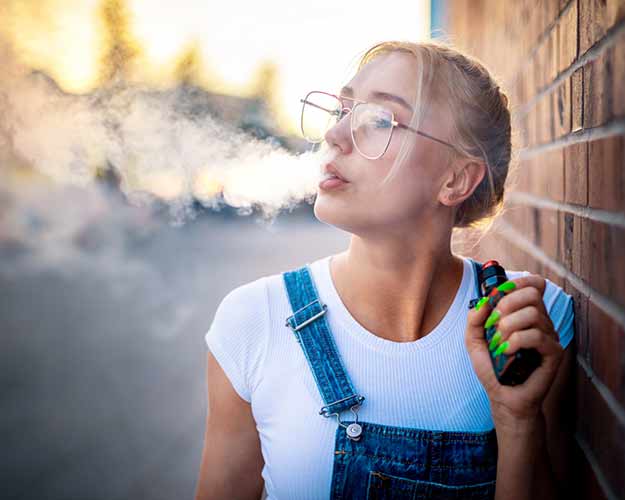
Can You Get Secondhand Smoke from Vaping?
What Household Improvements Were Reported?
More than half of respondents reportedly noticed improvements in several areas of household and social life.
These included:
- Overall quality of life
- Shared social activities
- Time spent together
- Exercising as a family
- Dining out
- Comfort in shared spaces
People who lived with the former smoker at the time of the change generally reported the strongest improvements.
This is understandable because household members are more likely to experience the daily effects of cigarette smoking, including:
- Tobacco smell
- Indoor smoke
- Restrictions on where smoking can occur
- Interruptions during meals or activities
- Smoke inside vehicles
- Ash and cigarette waste
- Concerns about children and secondhand exposure
The survey findings should not be interpreted as evidence that nicotine itself improves relationships. A more careful interpretation is that removing cigarette smoking may reduce behaviours and exposures that previously disrupted household life.
Respondents Also Reported Personal Changes
Friends and relatives reported perceived changes in former smokers who had used alternative nicotine products.
The reported changes included:
- Improved mood
- Greater self-confidence
- Increased sociability
- Better emotional interaction
- Improved physical appearance
- Better perceived physical health
These findings are subjective. Respondents were reporting what they believed they had observed rather than results measured through clinical examinations.
Changes in mood or social activity could also be influenced by many factors unrelated to the nicotine product, such as:
- Relief after quitting cigarettes
- Reduced stigma
- Improved confidence
- Changes in health
- Financial circumstances
- Family support
- Previous quit attempts
- Behavioural counselling
- Other lifestyle changes
The survey cannot establish which factor caused each reported improvement.
Did Families Believe the Products Helped Smokers Quit?
Among respondents who had observed a friend or relative use an innovative nicotine product, between 66% and 78% reportedly believed that the person could not have quit smoking without it.
The percentage varied by product and market.
This result describes the respondent’s belief. It does not prove that the former smoker would have failed to quit without the product.
However, it suggests that friends and relatives may view smoke-free nicotine alternatives as an important part of the smoker’s transition away from cigarettes.
This perception could affect the type of support a smoker receives at home. Family members who believe a quit method is effective may be more willing to:
- Encourage continued cigarette abstinence
- Help manage smoking triggers
- Accept temporary alternative nicotine use
- Support further quit attempts
- Avoid pressuring the person to stop all nicotine too quickly
- Recognise the difference between relapse and continued nicotine use
What the Survey Can and Cannot Prove
The poll provides useful information about household perceptions, but it is not a clinical trial.
What the Survey Can Show
It can show that surveyed friends and family members associated smoking cessation with:
- Less secondhand cigarette smoke
- Better shared experiences
- Perceived lifestyle improvements
- Support for access to alternative nicotine products
What the Survey Cannot Show
It cannot prove that:
- A specific nicotine product caused the person to quit
- Every reported former smoker was completely abstinent
- The products caused the reported health improvements
- All households would experience the same results
- One product category is safer or more effective than another
- Long-term product use is harmless
- The results represent every adult in the five countries
This distinction is essential when using survey findings in health or regulatory discussions.
Important Methodological Limitations
Several limitations should be considered before drawing broad conclusions.
The Study Was Commissioned by an Advocacy Organisation
We Are Innovation commissioned the research and promotes innovation-led policy, including harm-reduction approaches to nicotine.
Commissioning does not automatically invalidate the findings, but readers should consider the sponsor’s policy position when interpreting the report.
Respondents Were Recruited Through Opt-In Panels
Opt-in online samples may differ from the general population in ways that weighting cannot completely correct.
People who choose to participate in online surveys may have different experiences or opinions from those who do not.
The Survey Relied on Third-Party Reports
Respondents described another person’s smoking and nicotine use.
The researchers did not necessarily verify:
- Whether the person had stopped smoking completely
- How long abstinence had lasted
- Which products were used
- Whether the person also used cigarettes occasionally
- Whether other cessation support was involved
- Whether reported health changes were medically confirmed
Different Products Were Grouped Together
E-cigarettes, nicotine pouches and heated-tobacco products have different characteristics.
Combining them under one INP label can make the headline easier to communicate but reduces product-specific precision.
Association Does Not Establish Causation
Reported improvements occurred after the person stopped smoking or switched products. The timing supports an association but does not establish that the alternative product caused every change.
Is There Stronger Evidence That Vaping Helps People Quit?
Yes. Randomised trials and systematic reviews provide stronger evidence about nicotine e-cigarettes and smoking cessation than a household opinion survey.
The latest Cochrane review included evidence published through March 1, 2025. It evaluated 104 studies involving 30,366 adults who smoked.
The review found high-certainty evidence that nicotine e-cigarettes help more people stop smoking for at least six months than nicotine-replacement therapy.
In absolute terms, Cochrane estimated:
- Between 8 and 11 people out of 100 may quit using nicotine e-cigarettes.
- Approximately 6 people out of 100 may quit using nicotine-replacement therapy.
- Approximately 6 out of 100 may quit using non-nicotine e-cigarettes.
- Approximately 4 out of 100 may quit with behavioural support alone or no support.
These figures are estimates across study populations, not a guarantee for an individual smoker. Cochrane evidence summary
Does the Cochrane Evidence Apply to Every Product in the Poll?
No.
The Cochrane findings cited here concern nicotine e-cigarettes used for smoking cessation. They should not automatically be applied to:
- Nicotine pouches
- Heated-tobacco products
- Nicotine-free vapes
- Unregulated vaping products
- Products used by people who have never smoked
Each product category requires its own evidence.
For example, a nicotine pouch does not expose the household to an inhaled aerosol, but evidence about its role in long-term smoking cessation is not identical to the evidence for nicotine e-cigarettes.
Similarly, heated-tobacco products contain tobacco and have a different emissions profile from e-cigarettes.
Why Combustion Matters
The major difference between cigarettes and smoke-free nicotine products is combustion.
A cigarette burns tobacco, producing:
- Tar
- Carbon monoxide
- Fine particles
- Volatile organic compounds
- Tobacco-specific toxicants
- Numerous cancer-causing chemicals
E-cigarettes heat a liquid rather than burn tobacco. Nicotine pouches require no inhalation, and heated-tobacco devices heat tobacco below conventional cigarette combustion temperatures.
Removing combustion can reduce exposure to many harmful chemicals associated with smoking. However, it does not make every alternative risk-free.
The scientifically appropriate comparison depends on the person:
- For someone who does not smoke, avoiding nicotine products is the lowest-risk option.
- For a current smoker, switching completely away from cigarettes may reduce exposure to combustion-related toxins.
- For a dual user, continuing to smoke may preserve a significant part of the original risk.
- For a former smoker, avoiding a return to cigarettes is an important priority.
Complete Switching Matters More Than Partial Substitution
The greatest reduction in exposure occurs when cigarette smoking stops completely.
A person who vapes, uses pouches or uses heated tobacco while continuing to smoke is known as a dual or poly-product user.
Reducing the number of cigarettes smoked may be a step toward quitting, but even low levels of continued smoking can remain harmful.
A household may notice less smoke when cigarette consumption falls, but the home is not fully free from secondhand cigarette smoke until smoking stops.
Adult smokers using an alternative product should ideally set a clear goal of eliminating cigarettes rather than simply adding another nicotine product.
What Did the UK Evidence Review Find?
The Office for Health Improvement and Disparities published a major evidence update on nicotine vaping in 2022.
The review found that:
- Vaping exposes users to fewer toxicants than smoking.
- Toxicant exposure is generally lower among exclusive vapers than smokers.
- Vaping is not risk-free.
- Long-term risks require continued study.
- Incorrect perceptions about the relative risks of vaping and smoking should be addressed.
- Vaping products used through stop-smoking services recorded high quit-success rates.
The review also emphasised the need to prevent uptake among children and non-smokers while providing adult smokers with accurate comparative-risk information. UK government evidence update
Royal College of Physicians’ Position
The Royal College of Physicians’ 2024 review supports the role of e-cigarettes in reducing harm among adults who smoke.
Its approach can be summarised as follows:
- Smoking remains highly harmful.
- Adult smokers should be supported in quitting combustible tobacco.
- E-cigarettes can play a role in smoking cessation.
- Children and people who have never smoked should be discouraged from vaping.
- Product standards and regulation remain important.
- Health communication should explain relative rather than only absolute risk.
This creates a two-part public-health message:
Adult smokers should be encouraged to stop smoking, while children and non-smokers should not begin using nicotine products.
Do Smoke-Free Products Eliminate Secondhand Exposure?
Not in every case.
The answer depends on the product.
Nicotine Pouches
Nicotine pouches do not produce smoke or aerosol during use. They therefore do not create secondhand inhalation exposure in the same way as cigarettes or vapes.
They can still create other concerns, including accidental ingestion, youth access and environmental waste.
E-Cigarettes
E-cigarettes produce an aerosol that may contain nicotine, solvents, flavoring compounds, particles and other substances.
Secondhand aerosol is different from secondhand cigarette smoke, but it should not be described as clean air.
Heated-Tobacco Products
Heated-tobacco products create inhalable emissions containing nicotine and other chemicals. They do not eliminate bystander exposure.
For household air quality, complete cessation of all smoked and aerosol-producing products produces the clearest result.
Why Family Support Matters in Smoking Cessation
Quitting smoking is not only a medical event. It can also involve changes in routine, identity and relationships.
Family members may influence success by:
- Encouraging quit attempts
- Avoiding criticism after setbacks
- Helping remove cigarettes from the home
- Supporting professional cessation treatment
- Recognising withdrawal symptoms
- Participating in smoke-free household rules
- Avoiding unrealistic pressure
- Celebrating cigarette-free milestones
The Ipsos survey adds information about what those family members believe changed after smoking stopped.
While these perceptions are not clinical endpoints, they can help researchers and policymakers understand smoking as a household and social issue.
Policy Implications
The survey findings may contribute to discussions about how governments regulate non-combustible nicotine products.
Potential policy questions include:
- Should adult smokers have access to regulated alternatives?
- How should products be kept away from children?
- How should relative risks be communicated?
- Should every nicotine category be regulated identically?
- How can governments discourage dual use?
- What product standards are needed?
- How should household and bystander effects be measured?
- Which products should be approved or recommended for cessation?
A balanced approach would distinguish between protecting non-users and reducing risk among people who already smoke.
Frequently Asked Questions
What did the 2026 Ipsos nicotine survey find?
The survey found that friends and relatives of former smokers reported less secondhand smoke and improvements in several areas of household and social life after the smoker quit.
How many people participated?
The online survey included 4,010 adults across the United States, Canada, France, the United Kingdom and Japan.
Did the survey prove that nicotine products improved family life?
No. It measured respondents’ perceptions and identified associations. It did not prove that the products directly caused every reported improvement.
Who commissioned the study?
We Are Innovation commissioned the Ipsos survey. The organisation supports innovation-focused public policy, including tobacco harm reduction.
What products were included?
The report’s “innovative nicotine products” category included e-cigarettes, nicotine pouches and heated-tobacco products.
Are all smoke-free nicotine products equally safe?
No. The products work differently and have different risk profiles. None should automatically be described as harmless.
Do nicotine e-cigarettes help people quit smoking?
The Cochrane review found high-certainty evidence that nicotine e-cigarettes increase quit rates compared with nicotine-replacement therapy.
Does vaping produce secondhand smoke?
No tobacco is burned, so vaping does not produce cigarette smoke. It produces an aerosol that may expose bystanders to nicotine, particles and other substances.
Should non-smokers use nicotine products?
No. People who do not currently smoke should not begin using nicotine products, particularly products that can create dependence.
Is switching better than using cigarettes and alternatives together?
Complete switching is the more important harm-reduction objective. Continuing to smoke while using another product may preserve substantial smoking-related risk.
Final Thoughts
The Ipsos survey suggests that when smokers stop using cigarettes, the benefits may be noticed by more than the individual making the change.
Friends, partners and family members reported less secondhand smoke, improved shared activities and positive changes in household life. These findings are plausible because cigarette smoking affects indoor air, daily routines and social interactions.
However, the study measured perceptions. It did not verify smoking abstinence, establish medical outcomes or prove that every improvement was caused by an alternative nicotine product.
Stronger clinical evidence supports one part of the broader argument: nicotine e-cigarettes can help some adults quit smoking and may outperform traditional nicotine-replacement therapy in cessation trials.
The public-health message should therefore remain precise. Smoke-free nicotine products are not risk-free, the categories are not interchangeable, and children and non-smokers should not use them. For adults who already smoke, completely replacing combustible cigarettes with an appropriately regulated alternative may reduce exposure to many of the toxic chemicals created by burning tobacco.
Medical disclaimer: This article provides general information and does not replace advice from a doctor or qualified smoking-cessation professional.