



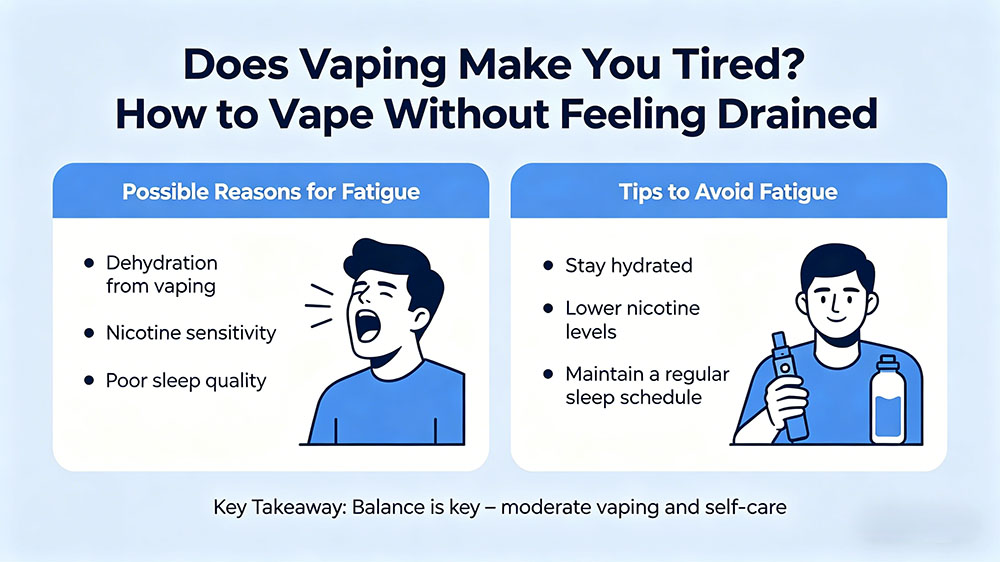
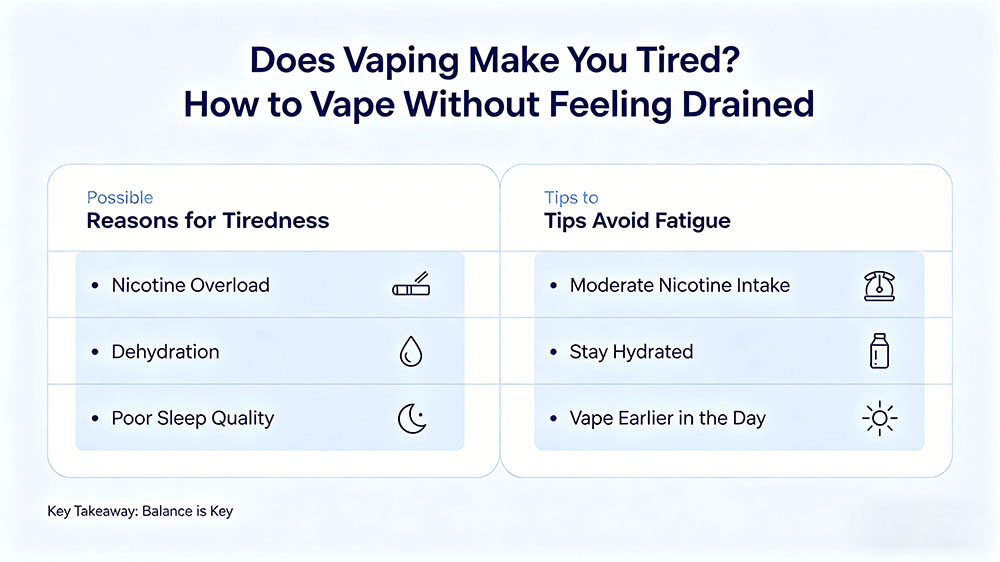
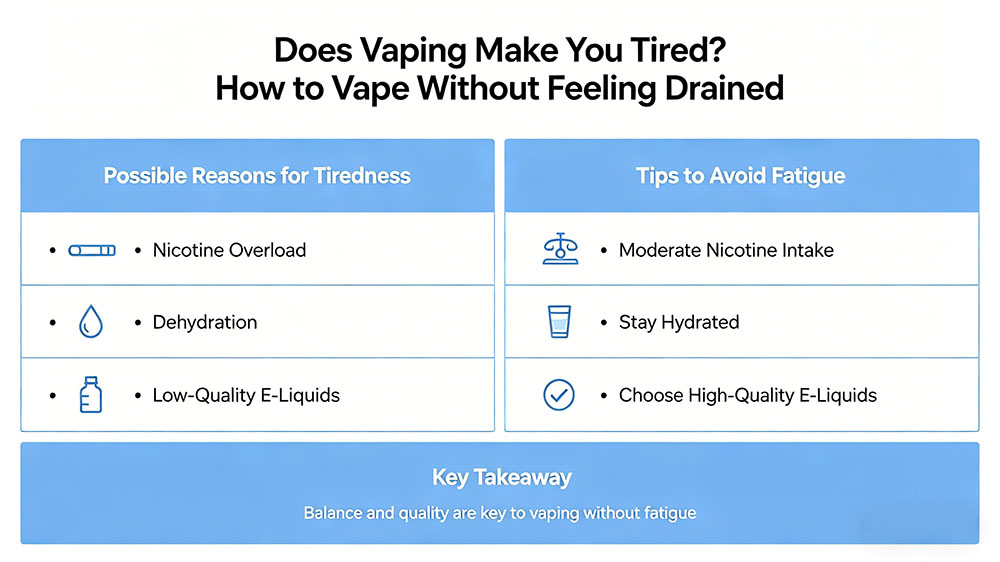
Does Vaping Make You Tired? How to Vape Without Feeling Drained
Vaping is often marketed—and perceived—as a more relaxing alternative to smoking. Many users reach for a vape to unwind, reduce stress, or even boost focus. But here’s the contradiction: some people actually feel tired after vaping.
So what’s really going on?
Let’s break down whether vaping can make you tired—and how to avoid that drained feeling.
1. What’s Actually Inside a Vape?
Before blaming vaping itself, it’s important to understand what you’re inhaling.
Most nicotine vapes contain e-liquid made up of:
- Propylene Glycol (PG) – enhances flavor and throat hit
- Vegetable Glycerin (VG) – produces vapor clouds
- Nicotine – the active stimulant
- Flavorings – for taste (no actual sugar involved)
PG and VG are widely used in food and pharmaceutical products and are generally not responsible for fatigue.
That leaves nicotine as the main factor.
2. Does Vaping Make You Tired?
(1) Nicotine: A Stimulant That Should Keep You Awake
Nicotine is classified as a stimulant, meaning it:
- Increases heart rate and blood pressure
- Boosts alertness and concentration
- Triggers dopamine release (the “feel-good” chemical)
That’s why many people vape to feel more awake or focused.
(2) So Why Do Some People Feel Tired After Vaping?
Here’s where things get interesting.
Nicotine doesn’t just stimulate—it also creates a cycle:
- Stimulation phase → You feel alert and energized
- Crash phase → Effects wear off → You feel tired or sluggish
This “nicotine crash” is the main reason vaping can make you feel drained.
On top of that:
- Frequent vaping builds nicotine tolerance
- Your body starts needing more nicotine for the same effect
- The “boost” becomes shorter, and the crash hits faster
Over time, this cycle can leave you feeling more fatigued than refreshed.
3. Other Reasons Vaping Might Make You Tired
Nicotine isn’t the only factor. A few other things can contribute:
Overuse
Chain vaping throughout the day overstimulates your system, which can lead to burnout.
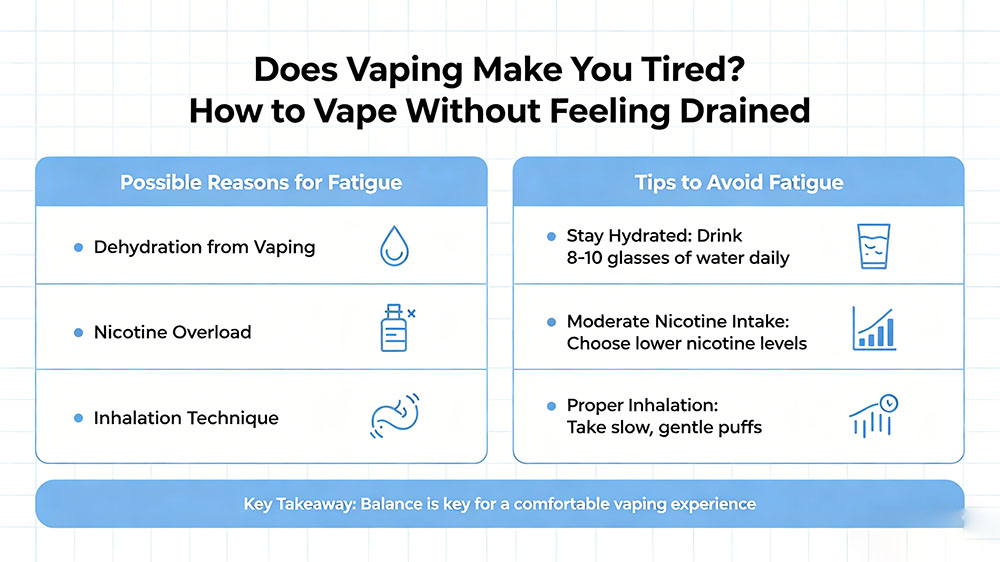
Mild dehydration
PG and VG can dry your mouth and throat, which may contribute to fatigue if you’re not drinking enough water.
Poor sleep quality
Nicotine affects your sleep—even if you don’t notice it immediately.
4. How to Avoid Nicotine Fatigue
If you enjoy vaping but hate the tired feeling, your habits matter more than the device.
(1) Control Your Nicotine Intake
Too much nicotine can lead to dizziness, nausea, and fatigue.
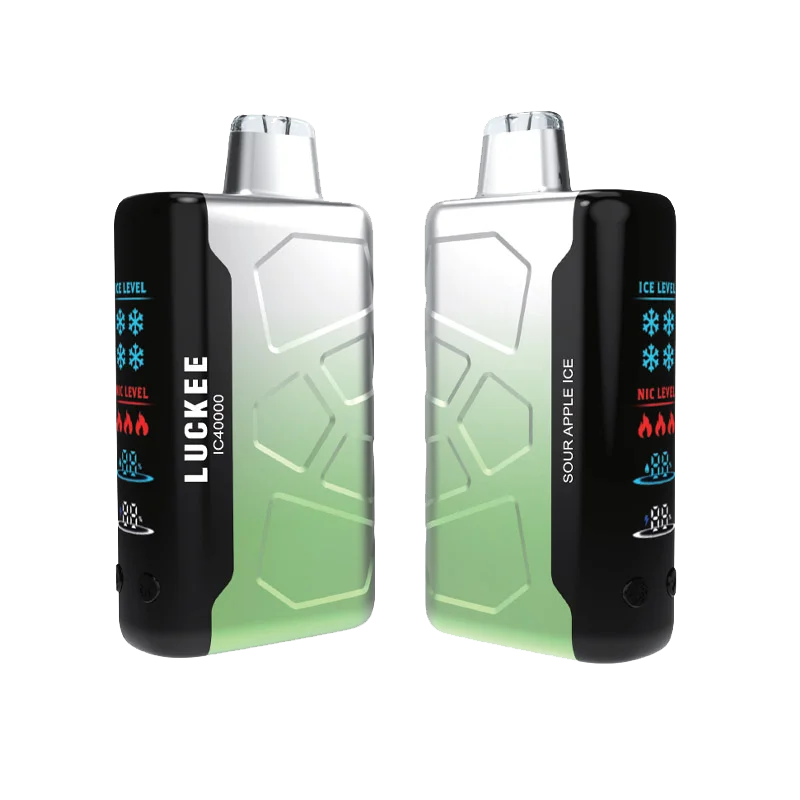
Using devices that allow nicotine level adjustment can help you:
- Avoid overconsumption
- Gradually reduce dependence
- Maintain a more stable energy level
The key is balance, not maximum strength.
(2) Consider Nicotine-Free or CBD Alternatives
If your goal is relaxation—not stimulation—nicotine might not be the best fit.
CBD vapes (nicotine-free) are often used for:
- Stress relief
- Relaxation
- Better sleep support
Unlike nicotine, CBD doesn’t cause stimulation or crashes, making it a better option for winding down.
(3) Avoid Vaping Before Bed
This is one of the biggest mistakes users make.
Even if nicotine feels calming, it actually:
- Keeps your brain active
- Delays sleep onset
- Reduces REM sleep (the most restorative phase)
Poor REM sleep means waking up tired, no matter how long you slept.
A simple rule: stop vaping at least 1–2 hours before bedtime.
(4) Watch Your Frequency
Instead of constant vaping:
- Take longer breaks between puffs
- Be intentional about when you vape, not just out of habit
This helps reduce tolerance buildup and prevents energy crashes.
5. Final Thoughts
Yes—vaping can make you feel tired, but not in the way most people expect.
It’s not the vapor itself—it’s the nicotine cycle:
- Short-term stimulation
- Followed by a crash
- Amplified by overuse and poor habits
If you manage your nicotine intake, avoid late-night vaping, and choose the right products, vaping doesn’t have to leave you drained.
Used correctly, it can stay on your side—not work against your energy and sleep.