


Fake Vapes Revealed: Dangers and How to Identify Counterfeit Devices
The vaping market is increasingly plagued by counterfeit products, becoming a serious concern for consumers worldwide. Picture this: a premium vape device that normally retails for over $100 suddenly appears online or at a local flea market for only $20. The appeal of such a deal is undeniable—who wouldn’t want a top-tier product at a fraction of the price? Unfortunately, offers like these are rarely genuine and often lead straight into the counterfeit vape market.
Fake vaping devices have rapidly spread due to several contributing factors. Compared to high-value electronics like smartphones or luxury items such as designer accessories, vaping products typically attract less attention and scrutiny. Because they are relatively affordable, both buyers and regulators may overlook potential risks. Additionally, the explosive growth of the vaping industry has created long and complicated supply chains, providing counterfeiters with numerous opportunities to introduce fake products into circulation. This in-depth guide exposes the real dangers behind counterfeit vapes and provides practical, easy-to-follow strategies to help you avoid purchasing unsafe, low-quality imitations.
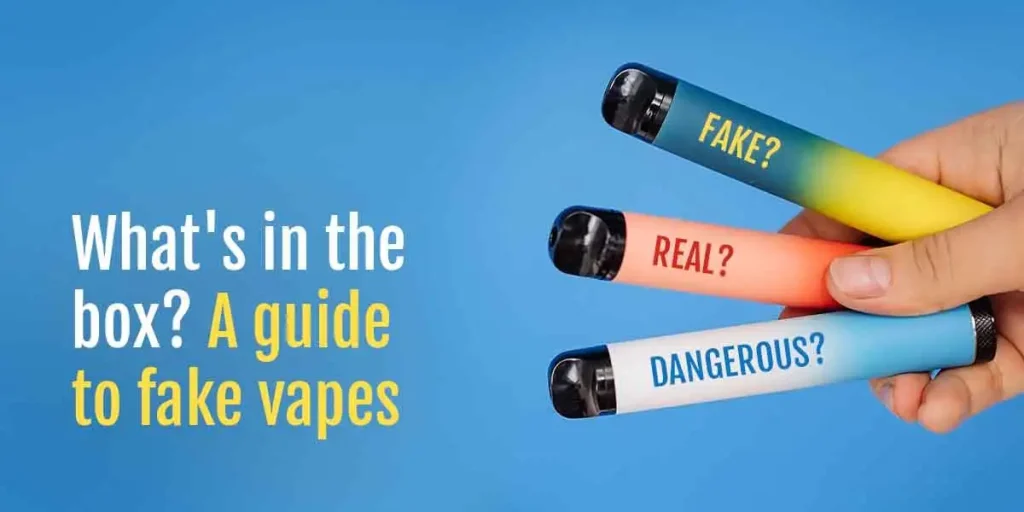
Fake Vapes Revealed: Dangers and How to Identify Counterfeit Devices
The Serious Risks of Counterfeit Vaping Products
Counterfeit vapes are not harmless knockoffs. They are illegal copies that violate trademarks and completely bypass safety standards. This blatant disregard for both intellectual property and consumer protection makes fake vapes especially dangerous, affecting not only performance but also user health.
1. Poor Overall Vaping Experience
Authentic vape products are designed to deliver consistency and quality. Counterfeit versions consistently fail to meet these expectations.
Unnatural Flavor and Inaccurate Nicotine Levels
E-liquid plays a central role in the vaping experience, and counterfeit liquids are often disappointing. Instead of smooth, authentic flavors, fake e-liquids tend to produce harsh, chemical, or plastic-like tastes. Nicotine concentrations are also unreliable. You may expect a moderate nicotine hit but instead receive either too little to satisfy cravings or an excessive amount that causes dizziness or nausea. For example, a genuine strawberry e-liquid should taste fresh and sweet, while a counterfeit version may taste artificial and unpleasant, with a noticeable chemical undertone.
Low-Quality or Defective Batteries
Many counterfeit disposable vapes imitate popular models, such as Aquios-style devices, but use recycled or faulty batteries. These batteries may come from discarded electronics and have already undergone extensive wear. As a result, battery life is drastically reduced. While a legitimate disposable vape might last an entire day, a fake one could stop working after only a few hours. Even worse, counterfeit batteries lack built-in protections against overheating, overcharging, or short-circuiting, significantly increasing the risk of malfunction.
Misleading Product Claims
Counterfeit vape manufacturers frequently exaggerate product specifications. Devices may claim to contain a certain amount of e-liquid but are often underfilled. A disposable advertised as holding 5 ml may contain only half that amount. Puff counts are also commonly overstated. While a legitimate disposable might deliver 500 puffs, a fake version may fail after fewer than 100, leaving users frustrated and deceived.
2. Major Safety and Health Concerns
Beyond poor performance, counterfeit vapes present serious safety hazards.
Unstable and Unsafe Battery Cells
Fake vapes often rely on low-grade or salvaged battery cells sourced from unreliable suppliers. These batteries may show visible damage such as swelling or discoloration and are far more likely to overheat. In severe cases, they can leak corrosive battery chemicals, ignite, or even explode, posing immediate danger to users and those nearby.
Absence of Critical Safety Protections
Authentic vaping devices are engineered with multiple safety systems, including temperature monitoring and automatic shutoff mechanisms that activate during overheating or electrical faults. Counterfeit vapes typically omit these features to reduce production costs. Without these safeguards, users are exposed to significant electrical and thermal risks during everyday use.
Unknown and Potentially Toxic Ingredients
The contents of counterfeit e-liquids are often unregulated and undisclosed. Unlike legitimate manufacturers that comply with ingredient disclosure and safety testing requirements, counterfeit producers operate without oversight. Fake e-liquids may contain heavy metals, contaminated additives, or untested flavoring agents that can negatively impact respiratory health over time.
How to Identify Fake Vapes
Spotting counterfeit vapes is possible if you know what to look for. Paying attention to small details can help you avoid unsafe products.
1. Low-Quality Packaging
Cheap Packaging Materials
Counterfeit vape packaging is usually made from thin, flimsy cardboard that bends or creases easily. Even brand-new products may appear damaged. Legitimate brands invest in durable, high-quality packaging that reflects their brand image.
Poor Print Quality and Errors
Blurry logos, misspelled brand names, incorrect fonts, or mismatched colors are common indicators of counterfeit products. Fake manufacturers often rely on low-resolution scans or inaccurate reproductions of original designs, resulting in visibly inferior packaging.
2. Missing or Incorrect Warning Labels
Non-Compliant Nicotine Warnings
Vaping regulations in most regions require standardized nicotine warning labels. Genuine products clearly display these warnings. Counterfeit vapes may omit them entirely or use outdated language that does not comply with current regulations, signaling a lack of legitimacy.
3. Inferior Build Quality
Misaligned or Loose Parts
Counterfeit devices often have uneven seams, crooked mouthpieces, or peeling logos. These flaws indicate poor manufacturing standards. Authentic vapes are assembled with precision and consistency.
Cheap or Unusual Texture
A genuine vape device feels solid and well-balanced in the hand. Fake vapes may feel unusually light, flimsy, or unstable, suggesting the use of low-grade materials.
4. Strange Taste and Vapor Performance
Harsh or Chemical Flavor Profiles
Experienced vapers can easily detect fake e-liquids by their sharp, artificial taste. Authentic flavors are smooth and well-balanced, while counterfeit liquids often leave an unpleasant aftertaste.
Erratic Vapor Output
Legitimate devices produce consistent vapor. Counterfeit vapes may alternate between weak vapor and sudden bursts of overly hot vapor, which can irritate or burn the throat.
Practical Ways to Avoid Counterfeit Vapes
Purchase Only from Authorized Sellers
Buying from official brand websites or verified retailers is the most reliable way to ensure authenticity. Many brands, such as Innokin, offer store locator tools to help consumers find authorized vendors.
Verify Authenticity Features
Reputable brands often include holographic stickers, serial numbers, or QR codes on packaging. Scanning these codes allows you to confirm authenticity directly through the manufacturer’s website.
Avoid Prices That Seem Too Good to Be True
Authentic vape products involve quality materials, testing, and research costs. If a product is priced far below market value—such as a $50 device selling for $10—it is almost certainly counterfeit.
Final Thoughts
Counterfeit vapes present serious risks, ranging from poor performance to significant health and safety dangers. Saving a few dollars is never worth compromising your well-being. By learning how to identify fake products and choosing trusted retailers, you can protect yourself and enjoy a safer, more satisfying vaping experience.