

Short answer: a vape in water is a dead device, not a drying project — especially if it is a disposable. FDA consumer guidance says to replace batteries that get damaged or wet, and to contact the manufacturer when the battery cannot be replaced. A sealed disposable has no replaceable battery. So the official answer is not “dry it out and see”. It is stop, isolate, and recycle.
That is more useful than the internet’s usual list of drying tricks. Below: what actually fails inside the device, the seven steps worth taking in the first hour, the habits that make things worse, and how to dispose of a wet vape without starting a fire in a bin lorry. If you are reading this with a device still dripping on the desk, jump to the timeline table.
What actually happens to a vape in water?
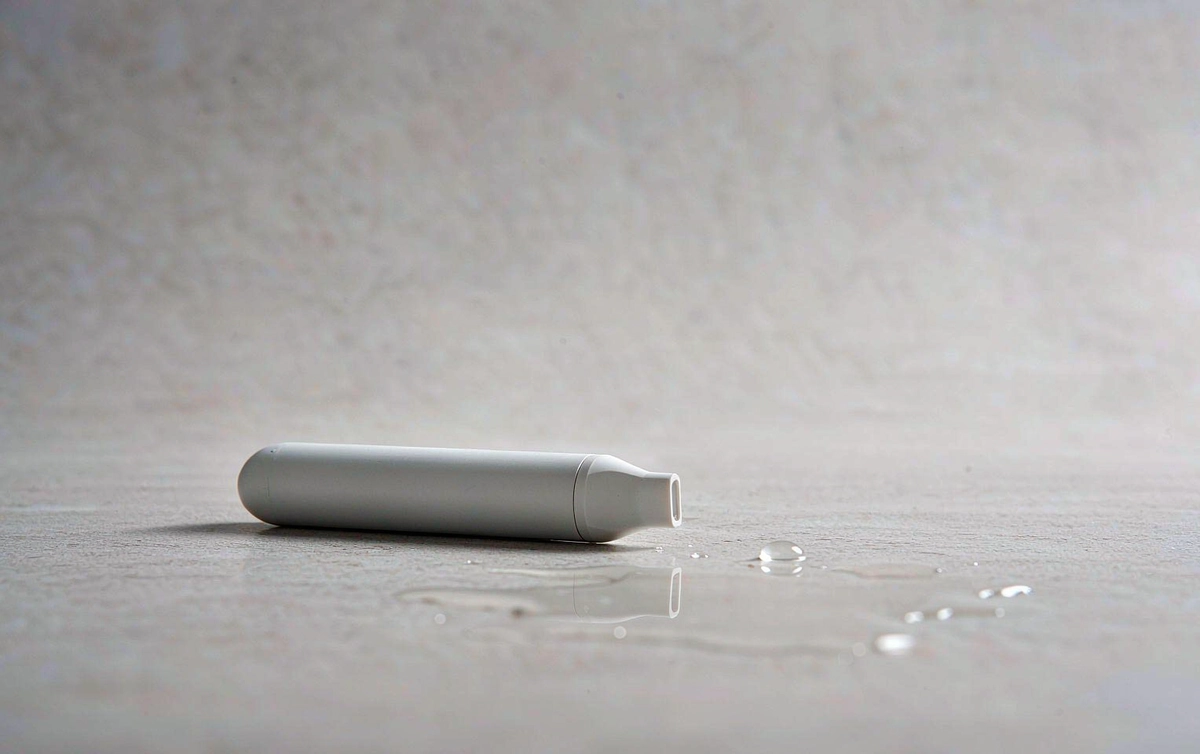
Water gets in through four routes: the mouthpiece, the airflow slots at the base, the USB-C port on rechargeable models, and the seam where the shell clips together. None of those openings is sealed against immersion. A splash and a dunk are different events; a dunk puts water where you cannot wipe it.
Once inside, three things happen at once. The liquid bridges contacts on the circuit board, so the device can behave as if a button has been pressed. The cotton wick absorbs water and dilutes the e-liquid, which is why a “recovered” device often tastes burnt or thin. Dissolved minerals stay behind after the water evaporates, leaving a film that keeps corroding metal for days.
That last part explains the delayed failures. A device that appears to work on Tuesday can short out on Friday. You can see the same uncertainty in the search terms people use: water in vape, vape fell in water, if a vape gets wet will it still work. The real question is not whether it works now, but whether it is safe later.
| Part | What water does | Can it be recovered? |
|---|---|---|
| Cotton wick / e-liquid | Dilutes the liquid; the wick holds water instead | No — replace the pod or the whole device |
| PCB and contacts | Bridges pads, can trigger unintended firing; residue corrodes | No — corrosion continues after drying |
| Lithium cell | Liquid ingress at terminals; internal short risk | No — fire services class it as damaged |
| Mouthpiece and shell | Traps water in seams and the airflow channel | Wipeable, but irrelevant once the cell is wet |
Why is the lithium cell the part that matters?
FDA’s battery safety guidance is unusually direct. Its five-tip infographic says to replace batteries that get damaged or wet — and, critically, to contact the manufacturer if the batteries are not replaceable. A disposable has no battery you can remove. Applying that guidance literally gives you one outcome: the whole unit is finished.
Fire services go further. Australia’s NT Police, Fire & Emergency Services lists batteries with “water or liquid ingress” as damaged batteries and says never use or charge them. Its recommended handling — remove the cell, wipe the terminals to prevent corrosion and short-circuiting — is impossible on a sealed disposable.
Charging is the moment most people turn a wet device into a dangerous one. Apple’s liquid-detection guidance warns that charging a wet connector can corrode the pins and cause permanent damage. That is general electronics advice, not a vape rule, but the mechanism is identical: a short needs a path, a charged cell, and someone plugging in a cable “just to check”.
Thermal runaway can also be delayed. GOV.UK guidance on transporting small waste electricals describes how damaged cells can enter a chain of exothermic reactions that destabilise the battery internally. That is why waste operators treat a wet vape as a hazardous item, not as damp plastic.
Can you dry a vape in water and keep using it?
For a disposable, the honest answer is no. “How to get water out of a vape” is a popular search, but a sealed shell gives you no way to reach the cell, the wick or the board. Surface drying fixes the outside. It does nothing about water held in the wick or residue left on the contacts.
The 48-hour air-dry advice comes from devices with removable batteries and accessible ports. It travels badly. You cannot open a disposable, cannot inspect its terminals, and have no indicator that tells you when the inside is dry. “It seems fine” is not a safety check.
If your device is a refillable kit, the calculation changes — and it is worth knowing which one you own before you decide anything. A dropped vape in water and a dropped disposable vape in water are not the same problem.
| Device type | What you can remove | Realistic outcome after a dunk |
|---|---|---|
| Sealed disposable | Nothing | Retire it; the cell cannot be inspected |
| Prefilled / closed pod kit | The pod | Discard the pod, dry the body, inspect contacts |
| Refillable pod or mod | Pod, tank, often the cell | Dry and inspect parts; replace coil and liquid |
| Rechargeable disposable (USB-C) | Nothing internal | Retire it anyway — charging is the risk |
What should you do in the first 60 seconds?
Speed matters for a few actions. Everything after that is about restraint — not doing the things that cause the short in the first place.
- Take it out of the water immediately. Seconds of immersion matter less than minutes sitting in a puddle.
- Do not press the firing button and do not take a puff to “test” it.
- If it is rechargeable, leave the cable unplugged. Do not connect a charger at any point.
- Pat the outside with a dry cloth. Do not shake it, spin it, or blow into the mouthpiece — that drives water deeper into the wick and board.
- If the pod or tank is removable, take it off and discard the liquid inside. Keep the parts separate.
- Put the device on a non-flammable surface in a dry, airy place, away from sunlight, radiators, coins, keys and anything combustible.
- Label it as damaged. If it becomes hot, swells, leaks, hisses or smells unusual, move away from it and contact the retailer, manufacturer or local fire service.
Two details are easy to miss. Get it out of a bag or pocket: coins and keys against a wet USB-C port are an unnecessary extra path for a short. And keep it away from children and pets — a damaged device still contains nicotine liquid.
Which “drying tricks” make it worse?
Most folk remedies were borrowed from phones, and even there the manufacturers say no. Apple’s support document says not to put a wet iPhone in a bag of rice, not to use an external heat source or compressed air, and not to push cotton swabs or paper into the connector. Those are general electronics principles, and they apply just as firmly to a device you cannot open.
| Trick | Why it fails | What to do instead |
|---|---|---|
| Rice or silica gel | Only dries the shell; dust and grains enter openings | Air-dry on a hard surface, then retire the unit |
| Hair dryer, oven, sunlight | Heat stresses a lithium cell; no way to check internal temperature | Room-temperature airflow only |
| Compressed air | Drives moisture further into the wick and board | Gentle pat with a lint-free cloth |
| Shaking or blowing through it | Pushes water into the airflow channel | Let gravity work, connector pointing down |
| Charging “to see if it works” | The most common route to a short and corroded contacts | Never charge a wet device |
| Taking one puff “to test” | Puts your mouth next to a compromised cell | Retire it |
| Pulling the shell apart | Exposes a charged cell and risks puncturing the pouch | Do not dismantle a sealed disposable |
Are any vapes waterproof?
Assume none of them are. A few products are described as splash-resistant and a handful carry an ingress-protection rating, but a rating on a marketing page is not a promise about immersion. It also says nothing about the mouthpiece, where water enters most easily. If a device does not state a tested rating, treat “are vapes waterproof” as a no.
A vape in water is never covered by a splash-resistance claim. For buyers comparing hardware, that question belongs on the same checklist as how to choose a reliable disposable vape manufacturer: ask for documentation, not adjectives.
A different question hides behind “can you vape water” and “can i put water in my vape pod”. Those are about using water as the liquid, not about dropping the device. Do not put water in a pod or tank. It is not a substitute for e-liquid, it will not produce a normal vapour, and heating a coil that is wet with plain water can scorch the wick.
How do you dispose of a water-damaged vape safely?
This is where a small household mistake becomes a documented public problem. GOV.UK guidance states that lithium batteries are responsible for roughly 48% — more than 200 — of all waste fires in the UK each year, at an estimated £158 million annual cost. Vapes are explicitly listed as small mixed WEEE. A wet device is exactly the kind of damaged item that can be crushed in a collection vehicle and ignite.
So do not put it in the general rubbish or the kerbside recycling box. In the UK, retailers that sell vapes must offer a take-back service for used devices and parts, and councils run small-electrical collection points; our vape recycling guide walks through the routes. Australian fire-service guidance adds one nuance: damaged batteries should not be dropped into ordinary battery collection bins without advice, because a compromised cell is a fire risk in storage too. Tell the staff what happened.
| Market | Route | Note |
|---|---|---|
| UK | Retailer take-back or council small-electrical / WEEE point | Vapes are WEEE; sellers must accept returns |
| EU | WEEE collection point or retailer take-back | Battery and electronics rules apply |
| US | Retailer, household hazardous waste or a battery programme | Rules are local; FDA asks consumers to report battery incidents |
| Australia | Council or battery stewardship point — ask first | Fire services flag damaged cells separately |
For retailers and distributors, a water-damaged return is not restockable stock. Log it, isolate it, and send it through the same take-back channel as any other damaged electrical item. Re-wrapping a wet device is a safety problem and, in markets with a single-use ban, a compliance problem as well.
What if it was a refillable pod kit instead?
With a pod system you have options. Remove the pod, discard the liquid, and let the body dry in airflow for at least a day before you consider reconnecting anything. Replace the pod or coil rather than trying to rescue it. If the cell is removable, take it out, wipe the terminals, and follow the fire-service advice above.
Two neighbouring problems are worth separating. A leak is usually a seal or pressure issue, not water ingress; a device that stopped firing after a knock may have a dislodged connection rather than a wet cell. See why a vape leaks, vape not working and the 10-problem troubleshooting guide for those paths. For the wider hardware picture, read what vape pods are and how they work and the refillable vs disposable comparison.
If you are unsure whether the device was submerged or merely splashed, treat it as submerged. The cost of a replacement is small. The cost of guessing is not.
So, what happens if you drop a disposable vape in water? The water ruins the wick and the board, but the real decision is about the cell you cannot see or remove. FDA guidance, fire-service guidance and consumer-electronics guidance all point the same way: stop using it, never charge it, and recycle it as damaged electrical waste.
That is the whole answer to a vape in water, and it is less satisfying than a recovery trick. The only step that reliably saves anything is the one you take in the first 60 seconds — getting it out of the water and off the charger.
This is general safety information, not a substitute for manufacturer instructions or local fire-service advice. If a device is hot, swollen, leaking, smoking or making unusual sounds, keep clear of combustible material and contact the retailer, manufacturer or your local emergency service. Nicotine-containing liquid should be kept away from children and pets.