






2025: A Defining Turning Point for the UK Vaping Industry
The year 2025 has clearly established itself as a critical milestone for the UK vaping sector. Six months after the nationwide prohibition on single-use disposable vapes came into effect, the market is undergoing a structural transformation. Although retailers are facing ongoing challenges related to regulatory compliance and inventory realignment, the industry is demonstrating strong adaptability. Momentum is increasingly being driven by rising demand for refillable pod systems, prefilled vape kits, and non-combustible nicotine alternatives, particularly nicotine pouches.

The Transition Toward Reusable and High-Capacity “Big Puff” Devices
Available market data highlights a pronounced shift in consumer behavior. Marcus Saxton, Chief Executive Officer of Totally Wicked Group and Chairman of the Independent British Vape Trade Association (IBVTA), reported that sales of rechargeable and refillable vaping devices reached 7.21 million units during the four-week period ending November 1, 2025. While still substantial, this figure represents a 56% decline compared with disposable vape sales recorded during the same period the previous year, reinforcing the view that the disposable ban has delivered meaningful environmental benefits.
Supporting this trend, Angelo Yang of ELFBAR indicated that approximately 85% of regular users have now transitioned to reusable devices. Refill product sales are exceeding device sales by a ratio ranging from three to nine, suggesting that consumers are actively reusing hardware rather than treating it as disposable, and that the intended use model is taking hold.
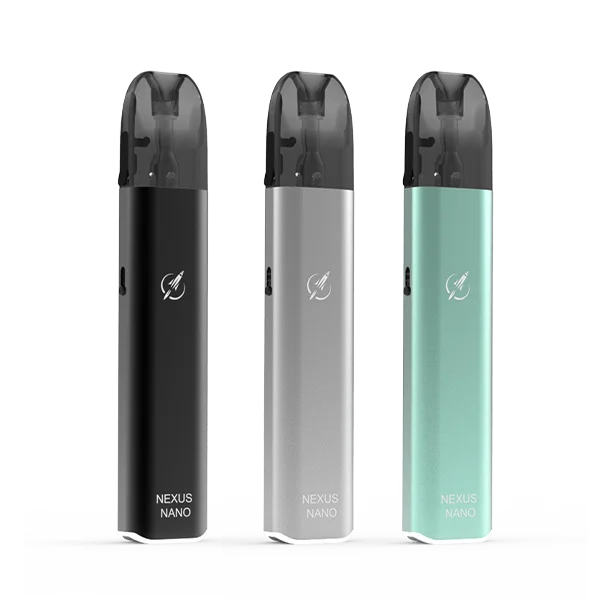
However, the transition has not been entirely without friction. Susanna De Iesu, Commercial Director at BAT UK & Ireland, drew attention to the rise of imitation products that closely resemble disposable vapes in both appearance and pricing, creating potential confusion among consumers. In response, and to address demand for more premium, compliant alternatives, leading manufacturers are accelerating innovation. BAT has introduced products such as the Vuse Ultra and Vuse Reload, while SKE has launched the SKE BAR 15K, a rechargeable device offering up to 15,000 puffs and positioned around long-term value and durability.
High-capacity “big puff” devices are becoming an increasingly important category. According to Chris Dong of SKE, these products play a key role in helping consumers move away from disposables by preserving familiar flavor intensity and inhalation characteristics, thereby reducing barriers to adoption.
Nicotine Pouches as the Fastest-Growing Category
Beyond vaping devices, the disposable ban has also fueled rapid growth in the nicotine pouch segment. Prianka Jhingan of Scandinavian Tobacco Group (STG) UK observed that a growing number of former vapers are switching to nicotine pouches, drawn by their discreet format, ease of use, and broad flavor selection.
The nicotine pouch market is now valued at just under £182 million, with total volumes increasing by 65% year on year. Growth has been even more pronounced in the convenience retail channel, where volume sales have surged by 81%, highlighting the category’s accelerating adoption among mainstream consumers.
Reflecting this momentum, Imperial Brands has entered the segment with its new ZONE nicotine pouch range, offering a variety of strength levels and flavor options, including “Berry Blast.” This move aligns with forecasts predicting a 234% expansion of the category over the next five years. At the same time, JTI has expanded its Nordic Spirit portfolio with the launch of higher-strength “Max” pouches at 17mg, alongside new fruit-based flavors designed to meet demand for faster nicotine delivery and stronger sensory impact.
Flavor Preferences and the Regulatory Outlook
Despite significant changes in device formats and product types, consumer flavor preferences have remained largely consistent. Fruit-led profiles such as blueberry sour raspberry, cherry ice, and pineapple continue to dominate across both vaping and nicotine pouch categories. Menthol flavors also retain strong popularity, while traditional tobacco options continue to underperform relative to other profiles.
To maintain continuity for users transitioning away from disposable products, manufacturers are reformulating these popular flavors into alternative formats, including high-impact “bar salt” e-liquids that replicate the intense taste experience associated with disposable vapes.
Looking ahead, the industry is preparing for further regulatory developments, including the Tobacco and Vapes Bill expected in early 2026 and the introduction of a new vape excise duty scheduled for October 2026. Industry leaders such as John Patterson of IKE Tech have cautioned that measures like packaging restrictions and age verification at point of sale may be insufficient to prevent youth access, advocating instead for technology-based controls at the point of use.
In the interim, wholesalers are being advised to adopt a diversified, tiered product strategy, ranging from entry-level pod systems to advanced mod devices, supported by a comprehensive selection of refill products, in order to effectively serve the evolving and increasingly segmented post-disposable consumer landscape.